[Get the best value sleeping bag ratings on Amazon today!]
# Sleeping Bag Ratings: How to Choose the Right One in 2026
Choosing the right sleeping bag can be the difference between a blissful night under the stars and a miserable, shivering experience. With so many options available, understanding sleeping bag ratings is crucial to ensuring you stay warm and comfortable on your next camping trip. In this guide, we’ll break down everything you need to know about **sleeping bag ratings** so you can confidently choose the perfect bag for your needs in 2026.
[Browse top-rated sleeping bag ratings on Amazon]
## Understanding Sleeping Bag Temperature Ratings
One of the most important factors to consider when choosing a sleeping bag is its temperature rating. These ratings indicate the lowest temperature at which the bag is designed to keep a “standard” sleeper warm. However, it’s not quite as simple as picking a bag rated for the lowest temperature you expect to encounter. Let’s delve deeper into the nuances of temperature ratings.
### The EN/ISO Standard
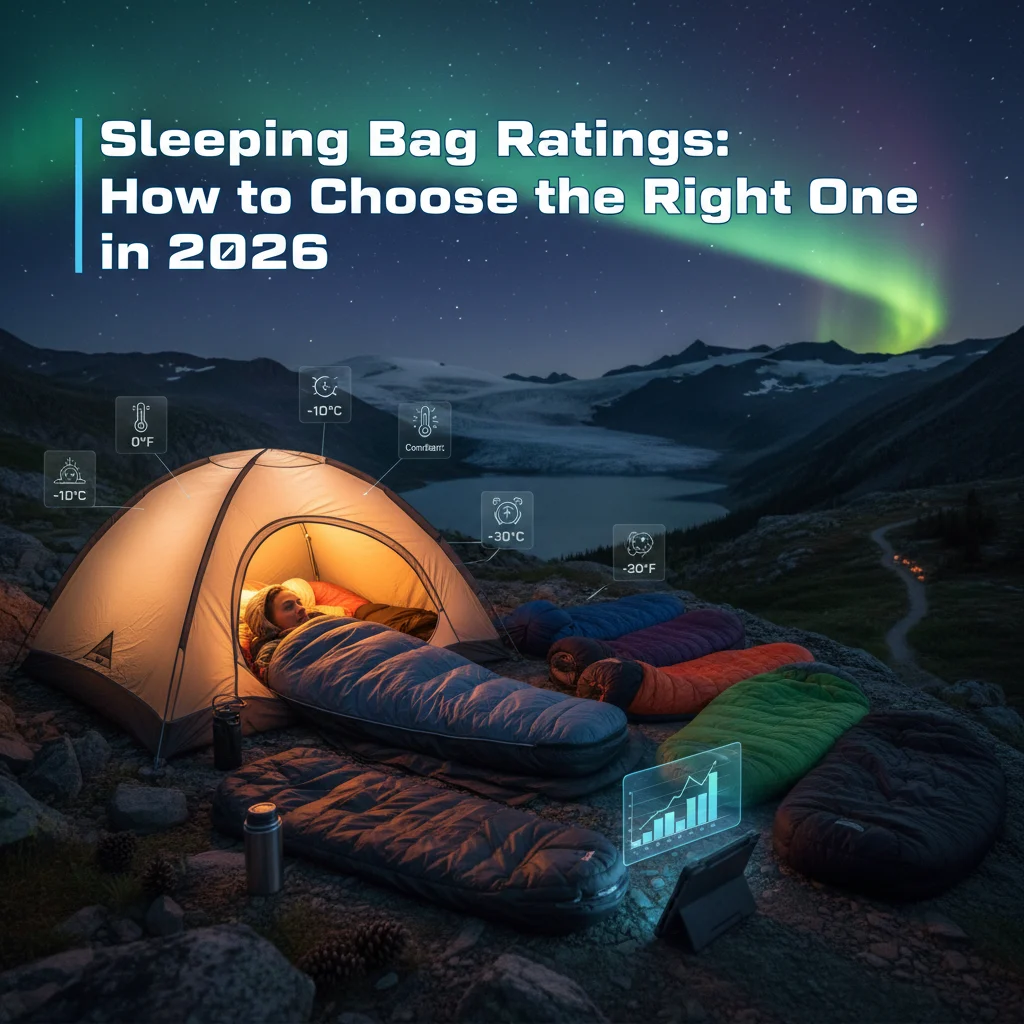
Most reputable sleeping bag manufacturers adhere to the EN (European Norm) or ISO (International Organization for Standardization) standard. This standard provides a consistent method for testing and rating sleeping bags, allowing consumers to compare different bags more easily. The EN/ISO test involves using a thermal mannequin inside the sleeping bag in a controlled laboratory environment. The test yields three key temperature ratings:
* **Comfort Temperature:** The temperature at which a “standard” adult woman can sleep comfortably in a relaxed position.
* **Limit Temperature:** The temperature at which a “standard” adult man can sleep for eight hours in a curled position without feeling cold.
* **Extreme Temperature:** The survival-only temperature. This is the temperature at which a “standard” adult woman can survive for six hours without risk of death from hypothermia. However, frostbite is still a risk.
**Important Note:** You should always focus on the Comfort and Limit temperatures when choosing a sleeping bag, not the Extreme temperature. The Extreme temperature is a survival rating, not a comfort rating.
### Why Temperature Ratings Aren’t Always Perfect
While the EN/ISO standard provides a useful framework, it’s important to remember that temperature ratings are not absolute. Several factors can influence how warm you actually feel in a sleeping bag:
* **Individual Metabolism:** Some people naturally sleep warmer or colder than others.
* **Clothing:** Wearing appropriate base layers can significantly increase the warmth of your sleeping bag.
* **Sleeping Pad:** A good sleeping pad provides insulation from the ground, which is crucial for staying warm.
* **Humidity and Wind:** High humidity and wind can make you feel colder, even if the temperature is within the bag’s rating.
* **Acclimatization:** Your body’s ability to adjust to cold temperatures can affect how warm you feel.
### Tips for Interpreting Sleeping Bag Ratings
Given the variables involved, here are some tips for interpreting sleeping bag ratings:
* **Err on the Side of Caution:** If you’re unsure, choose a bag with a lower temperature rating than you think you need. It’s easier to vent a sleeping bag if you’re too warm than to warm it up if you’re too cold.
* **Consider Your Sleeping Style:** If you tend to sleep cold, choose a bag with a Comfort rating that’s lower than the expected nighttime temperature.
* **Read Reviews:** See what other users have to say about the bag’s warmth.
* **Test It Out:** If possible, test the sleeping bag in a controlled environment before taking it on a trip. Even just setting it up in your backyard on a cool night can give you a better idea of its performance.
[Browse top-rated sleeping bag ratings on Amazon]
## Types of Sleeping Bag Insulation
The type of insulation used in a sleeping bag is another crucial factor that affects its warmth, weight, and compressibility. There are two main types of insulation: down and synthetic.
### Down Insulation
Down insulation is made from the soft, fluffy feathers found under the outer feathers of ducks and geese. Down is known for its exceptional warmth-to-weight ratio, compressibility, and durability.
**Pros of Down Insulation:**
* **Excellent Warmth-to-Weight Ratio:** Down provides more warmth for its weight than any other insulation material.
* **Highly Compressible:** Down can be compressed into a small size for easy packing.
* **Durable:** With proper care, down sleeping bags can last for many years.
**Cons of Down Insulation:**
* **Expensive:** Down sleeping bags are typically more expensive than synthetic bags.
* **Loses Warmth When Wet:** Down loses its insulating properties when wet, and it can take a long time to dry.
* **Requires More Care:** Down sleeping bags require special washing and storage to maintain their performance.
**Fill Power:** The quality of down is measured by its fill power. Fill power refers to the number of cubic inches that one ounce of down occupies. Higher fill power means the down is fluffier and traps more air, resulting in better insulation. A higher fill power also means the down is lighter and more compressible. Look for down with a fill power of 600 or higher for good quality, and 800 or higher for excellent quality.
### Synthetic Insulation
Synthetic insulation is made from polyester fibers that are designed to mimic the properties of down. Synthetic insulation is less expensive than down and performs better in wet conditions.
**Pros of Synthetic Insulation:**
* **Less Expensive:** Synthetic sleeping bags are generally more affordable than down bags.
* **Maintains Warmth When Wet:** Synthetic insulation retains some of its insulating properties even when wet.
* **Easy to Care For:** Synthetic sleeping bags are easier to wash and dry than down bags.
**Cons of Synthetic Insulation:**
* **Lower Warmth-to-Weight Ratio:** Synthetic insulation is heavier and bulkier than down for the same level of warmth.
* **Less Compressible:** Synthetic sleeping bags are not as compressible as down bags.
* **Less Durable:** Synthetic insulation tends to break down over time, reducing its insulating properties.
**Types of Synthetic Insulation:** There are many different types of synthetic insulation, each with its own unique properties. Some popular options include:
* **Polyester Fill:** A basic and affordable option.
* **Continuous Filament:** Made from long, continuous fibers that are less likely to break down over time.
* **Short-Staple Fill:** Made from short, crimped fibers that trap air and provide good insulation.
[Browse top-rated sleeping bag ratings on Amazon]
## Sleeping Bag Shape and Size
The shape and size of your sleeping bag can also affect its warmth and comfort. There are three main types of sleeping bag shapes:
* **Mummy Bags:** Mummy bags are tapered from the shoulders to the feet, which reduces the amount of space inside the bag and improves thermal efficiency. Mummy bags are a good choice for cold-weather camping.
* **Rectangular Bags:** Rectangular bags are the most spacious type of sleeping bag, but they are also the least thermally efficient. Rectangular bags are a good choice for warm-weather camping or for people who like to have plenty of room to move around.
* **Semi-Rectangular Bags:** Semi-rectangular bags offer a compromise between mummy bags and rectangular bags. They provide more space than mummy bags but are still more thermally efficient than rectangular bags.
**Sleeping Bag Size:** Choose a sleeping bag that is the right length for your height. If the bag is too long, you’ll have extra space inside that will need to be warmed up, which can reduce its thermal efficiency. If the bag is too short, you’ll be cramped and uncomfortable. Many manufacturers offer sleeping bags in different lengths to accommodate different body sizes.
[Browse top-rated sleeping bag ratings on Amazon]
## Key Features to Look For in a Sleeping Bag
Beyond temperature ratings and insulation, several other features can enhance your sleeping bag’s performance and comfort:
* **Hood:** A hood can significantly improve the warmth of your sleeping bag, especially in cold weather. Look for a hood that can be cinched down to trap heat around your head.
* **Draft Collar:** A draft collar is a padded tube that sits around your neck and shoulders, preventing warm air from escaping from the bag.
* **Zipper:** A full-length zipper allows you to open the sleeping bag completely for ventilation in warm weather. Look for a zipper with a draft tube to prevent cold air from entering the bag.
* **Internal Pockets:** Internal pockets are useful for storing small items like your phone, headlamp, or wallet.
* **Water-Resistant Shell:** A water-resistant shell can help protect the insulation from moisture.
* **Stuff Sack:** A stuff sack is used to compress the sleeping bag for storage and transport. Look for a stuff sack that is durable and easy to use.
[Browse top-rated sleeping bag ratings on Amazon]
## Recommended Sleeping Bags for 2026
Based on the criteria discussed above, here are a few recommended sleeping bags for 2026, catering to different needs and budgets. Note: Prices and availability can vary. Always check Amazon for the most up-to-date information.
### 1. Kelty Cosmic Down 20 (Best Overall)
* **Best For:** Backpacking, camping in moderate temperatures.
* **Key Features:** 600-fill down, durable ripstop nylon shell, comfortable temperature rating.
* **Why We Like It:** A great balance of warmth, weight, and price. This bag is a reliable performer for a variety of conditions.
### 2. Therm-a-Rest Hyperion 20 (Ultralight Option)
* **Best For:** Backpacking where weight is a critical concern.
* **Key Features:** 900-fill down, ultralight construction,
[Check the latest prices and deals for sleeping bag ratings on Amazon today!]